 |
|
|
6 to 9 Dental Clinic of Dr. Humphrey & Associates
| |
1765 E. Bayshore Road
Suite H
E. Palo Alto, CA 94303
|
|
|
Phone: |
(650)321-6911 |
|
|
Email: |
Vhumphrey2@aol.com |
Dental Advice from Dr. Humphrey
Dental Disease Process
In a nut shell, plaque is the dental adversary. It consists of various bacterial colonies forming every 24 hours whether or not food is ingested. It secretes an acidic waste product which burns and irritates the gums and teeth leading to caries and periodontal disease.
Each day that plaque is allowed to sit on the teeth (including in between and under the gum line), it slowly hardens as it destroys tissue and deepens gum pockets making it more difficult to remove.
Prevention
Our office recommends the following oral hygiene program once daily:
Pre-rinse or pre-brush with Plax (swish 1-5 minutes) Brush lightly for 10 seconds with each area of the brush, angling 45 degrees into the gum line with a circular vibrating motion; or use an electric brush.
Floss in a figure eight movement rapidly stroking at least 6 times against both sides of the tooth. Bleeding may occur. The advanced technique includes a knot tied in the floss demonstrated at our office. Listerine is used next to fight gum disease.
Follow with Gel Kam Fluoride applied to the gum line and rinsed after 30 minutes.
For more helpful information visit the American Dental Association.
About Teeth
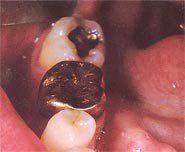
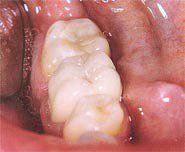
Teeth are not complicated to understand. The crown, or what is visible in the mouth, consists of an egg type makeup. The outside shell layer, enamel, is the hardest substance in the body. Harder than bone with great compressive strength, but weak in it's tensile vigor. Meaning it can withstand the strong forces of your jaw muscles, but cannot flex if you bite side ways on a foreign object, or change from cold to hot quickly. Those conditions cause fractures to form. Everyone has them in their teeth, some larger and more noticeable. Enamel is more resistance to acid from dental plaque and your stomach than other structures. Once a small hole is made in the tooth, the disease can spread quickly into the dentin, decaying large areas of the tooth which can progress to the pulp. Fluoride, if given to children topically and systemically early enough, combines with the enamel matrix strengthening it's shield. In adults extra fluoride may be applied topically if caries or exposed roots are problems.
Dentin, the second layer of the crown structure and outer layer of the root, is much softer than enamel, and microscopically looks like a hard natural sponge consisting of tubules filled with moisture and nerve tentacles from the pulp. Any changes in the water pressure, temperature, or chemistry send signals to the nerve resulting in pain. This structure is not resistance to acid or bacteria which can infect the pulp and cause the tooth to die.
The inner pulp structure is basically comprised of soft nerve and blood tissue housed in the hollow center of the tooth. The pulp which is necessary for tooth formation, later prevents the tooth from weakening. Fractures can be better avoided by having a healthy pulp sensitive to foreign oral objects. When the nerve is removed, as in root canal therapy, the tooth dries out and may not last your lifetime. Therefore, it must be cover with a crown to prevent serious fractures.
Inflammation of the pulp, causes the nerve to die. Excessive bruxing, malocclusion, deep caries, replacing large fillings or crowns, drinking hot beverages, chewing on ice, trauma, deep fractures, periodontal disease, missing fillings, and rapid movement in orthodontics contribute to this common problem.
Self Diagnosis and First Aid for Teeth
Dental treatment unavoidably causes mild inflammation. Taking Advil before and after treatment, for 2 weeks, lessens the irritation. Some pain from treatment is normal. The pain should diminish each day, and be mostly unnoticeable in 3-6 weeks. If it worsens three days after therapy, have the bite adjusted. If the tooth throbs constantly after 3 days, and does not respond to Advil, also see your dentist as your tooth may not be healthy enough to heal itself.
For tooth problems not associated with having had recent dental treatment:
1.) Cold sensitivity- very common.
a.) Pulpitis-If you drink something very cold, and you feel a sharp, short pain, that is reversible pulpitis. The nerve is trying to repair itself, most commonly from recent dental treatment, a fracture, or trauma. Treat your tooth like a sprained ankle. Take advil and stay off it.
If the tooth doesn't start to feel better after a couple weeks or worsens and the pain to cold lingers, or the pain is felt even with room temperature water, see your dentist. You may have irreversible pulpitis as the tooth can not heal itself and root canal treatment is required.
b.) Dentinal sensitivity-Exposed roots at the gum line can also be sensitive to cold due to grinding, heavy brushing, or tabacco. Try to locate the tooth. Is the pain from the root area or from the whole tooth. Do you see a black area or hole? If not, and the pain is only from the root, use a very strong pure topical fluoride gel, such as Gel Kam®, and toothpaste for sensitive teeth until it goes away. Gel Kam® also comes unflavored, and should be used at room temperature.
2.) Heat sensitivity- less common and more serious.
a.) Reversible Pulpitis- exposing a tooth to heat elicits a sharp, short, non lingering pain. The nerve is telling you that it is being irritated from a deep cavity, a fracture, recent dental treatment, or trauma.
b.) Irreversible pulpitis/Pulp necrosis- the delayed pain from hot now lingers or throbs for over a minute signaling that the soft tissue nerve has died and is forming an abscess.
Both conditions are serious requiring immediate dental treatment.
3.) Sweets sensitivity- A cavity/decay is present. Use strong, topical fluoride 2 x day until you can see your dentist for a filling.
4.) Percussion sensitivity- Pain when the tooth is tapped. a.) Slight pain from this is usually from the periodontal ligament which holds the root to the bone. Common causes are from bruxism or grinding/clenching, sinus infection, orthodontics, trauma, or dental treatment. A simple cavity would not be the cause. It should go away with time especially if you can fabricate a temporary night guard to alleviate the stress. Take Advil, don't chew gum, and have a soft diet.
b.) Severe pain to tap, with other symptoms, may indicate an abscess. See your dentist.
5.) Pressure/Bite sensitivity- Pain to bite is also common.
a.) Biting down pain-Common causes are from bruxism or grinding/clenching, fracture, sinus infection, orthodontics, trauma, and in some cases if the pain is severe, an abscess is present. A high spot on a filling or crown/cap can mimic this symptom, but could be easily remedied with an adjustment by your dentist.
b.) Lifting off pain- almost always a fracture which causes more pain as the bite is released than when biting down on the object, requiring a crown to prevent further fracture movement. Usually the tooth only hurts when biting on one edge or when chewing at a certain angle.
6.) Bleeding/Itchy gums- most likely gingivitis or periodontitis which is most commonly caused by the acid secreted from dental plaque. Other causes are fractures, foreign bodies, such as a piece of tarter, food, or jagged filling material. Tie a knot it the floss. Once under the gum, gently pull side to side. See prevention advice above. Get a professional cleaning. In rare cases, you could have a medical problem like diabetes, anemia, or a vitamin C deficiency.
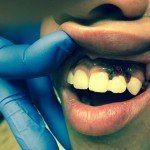
7.) Swollen Gums- Perio/Endo abscess. If it is gum related, you have likely lost bone from disease or a fracture, and now have a deep gum pocket which is accumulating bacteria. You may have a bad taste or odor. Rinse with hydrogen peroxide, use dental tooth picks and proxy brushes to clean thoroughly. See your dentist for root planning, and Peridex® rinse. You may need to take Periostat® medication or treat locally with antibiotics. You may need a root canal if the nerve is also involved. A Periodontist, gum specialist, can help save your teeth if your dentist can't. Get a second opinion before having your teeth pulled. (See prevention tips.)
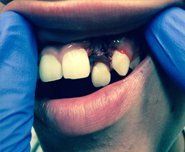
8.) Pus Bubble on Gum Tissue- Pulp and/or Endo abscess. You need a root canal. Only in cases of severe pressure pain should you attempt to drain the head of the bubble using a sterile pin prior to your dental appointment as you may spread the infection. Take antibiotics.
9.) Upper Jaw Pain or Pressure- commonly from a sinus infection or dental abscess.
a.) Sinus problems- If your tooth feels long, vibrates when you walk, worsens when upside down, and putting pressure on your face next to your nose hurts, you may have a sinus infection. Breathing steam, using a decongestant and nasal spray to open passage ways to the sinus for drainage, and taking Airborneª to improve your immune system, will help. See your dentist or physician for antibiotics if it lingers, especially if pain developed after recent surgery.
b.) Dental abscess -constant ache, unlike with a sinus infection where a few teeth hurt, one tooth root will start to ache keeping you awake at night. Check if you see a large hole on the tooth, or if any teeth are loose or sensitive to heat. You may need root canal therapy.
c.) Shingles, mumps, or neuralgic pain disorders- seek medical advice.
10.) Lower Jaw Pain- from muscles or teeth.
a.) Bruxing and dental treatment can cause myofacial pain, or cheek pain. It may feel like a big knot when the muscle spasms in your cheek. It hurts to chew, but warmth makes it feel better. If none of your teeth severely hurt, nor does pushing along the gum area, take Advil, use a temporary store bought night guard, and put warm, wet compresses on face. You can get a mild muscle relaxant from your health care provider, like Valium, if needed. Massage and stretch the area. Soft diet, no gum chewing, or clenching.
b.) Abscess-If a lot of pain is coming from a tooth such as tenderness or swelling in the gum underneath and it is discolored or slightly loose, you most likely have an abscess-see your dentist.
c.) Shingles, tumors, or neuralgic pain disorders- seek medical advice from an ENT doctor.
11.) Tongue problems
a.) Pain-from yeast, trauma, or other medical conditions-seek medical advice.
b.) Coating(white or black)-can be from plaque, yeast, or over grown tongue fibers(AKAHairy Tongue)of which can temporarily stain over time, or when using rinses such as Peridex®. Brush the tongue with a mix of hydrogen peroxide baking soda and scrape the tongue daily with a hygiene device to remove plaque. For yeast use topical anti fungal. Consult dentist.
c.) Sores- cancre sores can reoccur, are not contagious, and can be the result of allergies, stress, acid reflux (read our dental news page), vitamin deficiencies, or trauma from injury or rubbing on a rough tooth.
Ask Doctor Humphrey if you have any other questions.
Disclaimer- this information is for educational purposes only and not to be used as an alternative to having a proper dental exam, and accurate diagnosis. Delaying treatment may worsen your dental condition.
Click Here for More Information
 |
 |